 Shu Guang
Shu Guang
Shu Guang
Explore our high-performance electrical fuses engineered for extreme durability, sub-millisecond arc interruption, and seamless system integration.
Insight into the engineering requirements driving modern substation, wind farm, and BESS safety.
As solar arrays, offshore wind turbines, and Battery Energy Storage Systems (BESS) integrate into global networks, traditional protection schemes face bidirectional fault risks. Modern medium voltage fuses must offer tailored current-limiting characteristics to handle irregular harmonic distortions and sudden dc-bus discharge currents typical in converter-based systems.
The rise of predictive distribution networks requires overcurrent protection systems to support sensor-ready architectures. Striker-pin initiated trip systems are now coupled with auxiliary micro-switches, sending automatic trip telemetry directly to regional SCADA platforms, slashing utility localization and downtime cycles from hours to milliseconds.
Utility procurement operations demand dual-certified protection components. Fuses must be rigorously tested across intersecting global guidelines—meeting German DIN standards alongside British standard (BS) and American ANSI/IEEE criteria. This cross-compatibility ensures reliable installation environments globally without safety margins deviation.
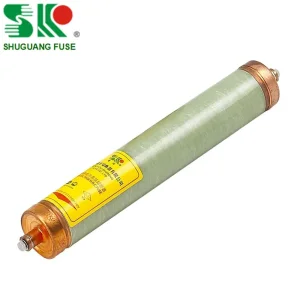
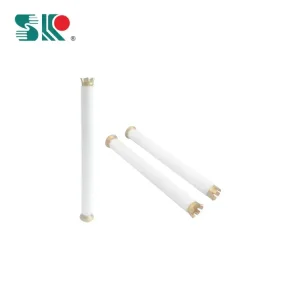
At medium voltage (1kV to 40.5kV), clearing an overcurrent fault is not simply a matter of melting a wire. Our current-limiting fuses utilize high-purity, synthetic silica quartz sand packed inside heavy-duty, high-thermal alumina ceramic barrels.
When a short-circuit fault peaks, the custom-notched, pure silver ribbons ($99.99\%$ purity) melt rapidly, forming parallel electrical arcs. The high energy of these arcs vaporizes the surrounding quartz sand, forming non-conductive glass channels called fulgurites. This abrupt phase change creates an extremely high arc resistance, forcing the fault current to drop to zero well before the peak of the system's short-circuit current wave.
For back-up application lines, we incorporate the **"M-Effect"** (metallurgical low-temperature alloy spots applied to the silver elements). This allows the fuse to safely clear low-overcurrent faults that lie near the minimum breaking current ($I_3$), avoiding catastrophic thermal runaway of the outer housing.
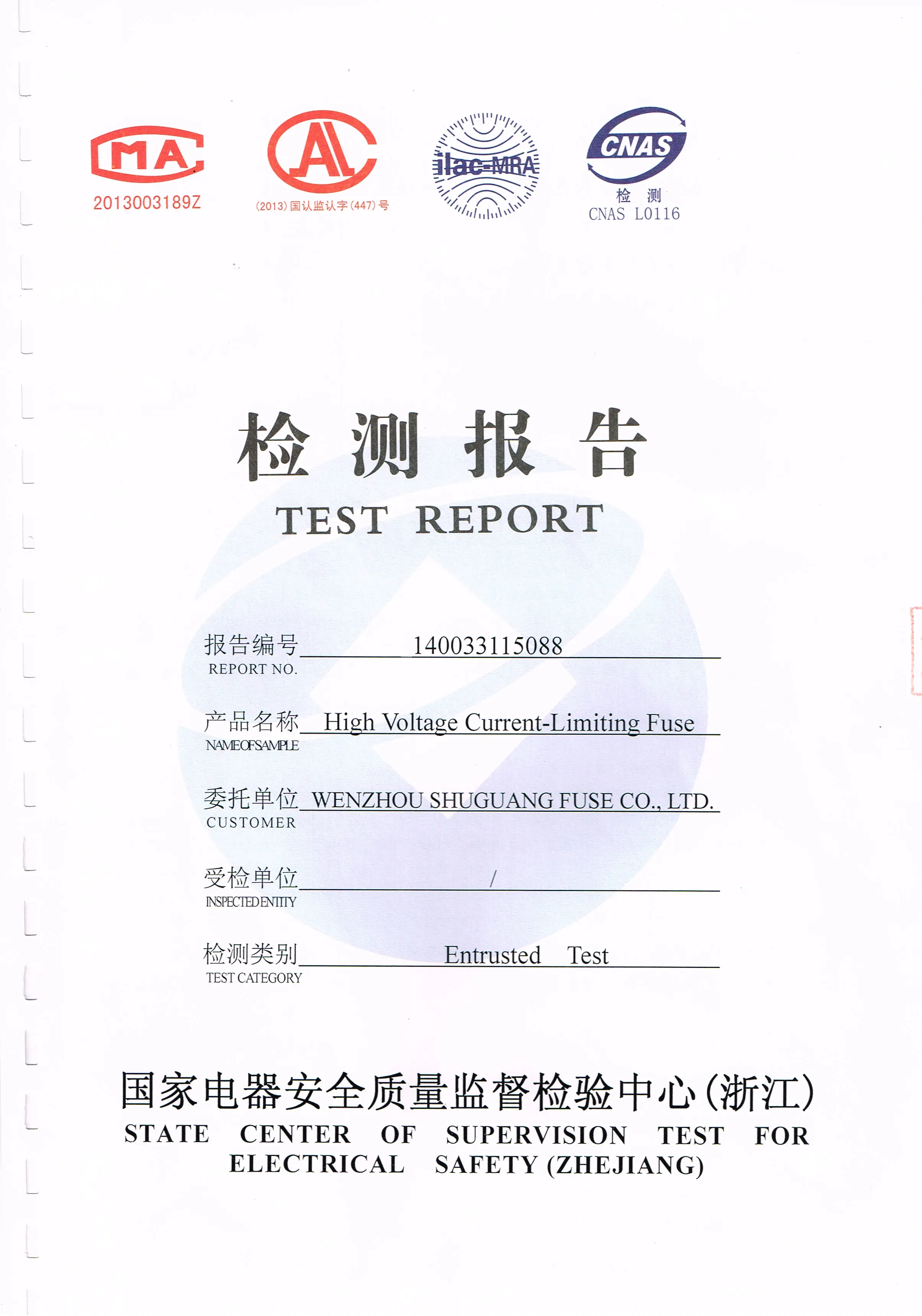
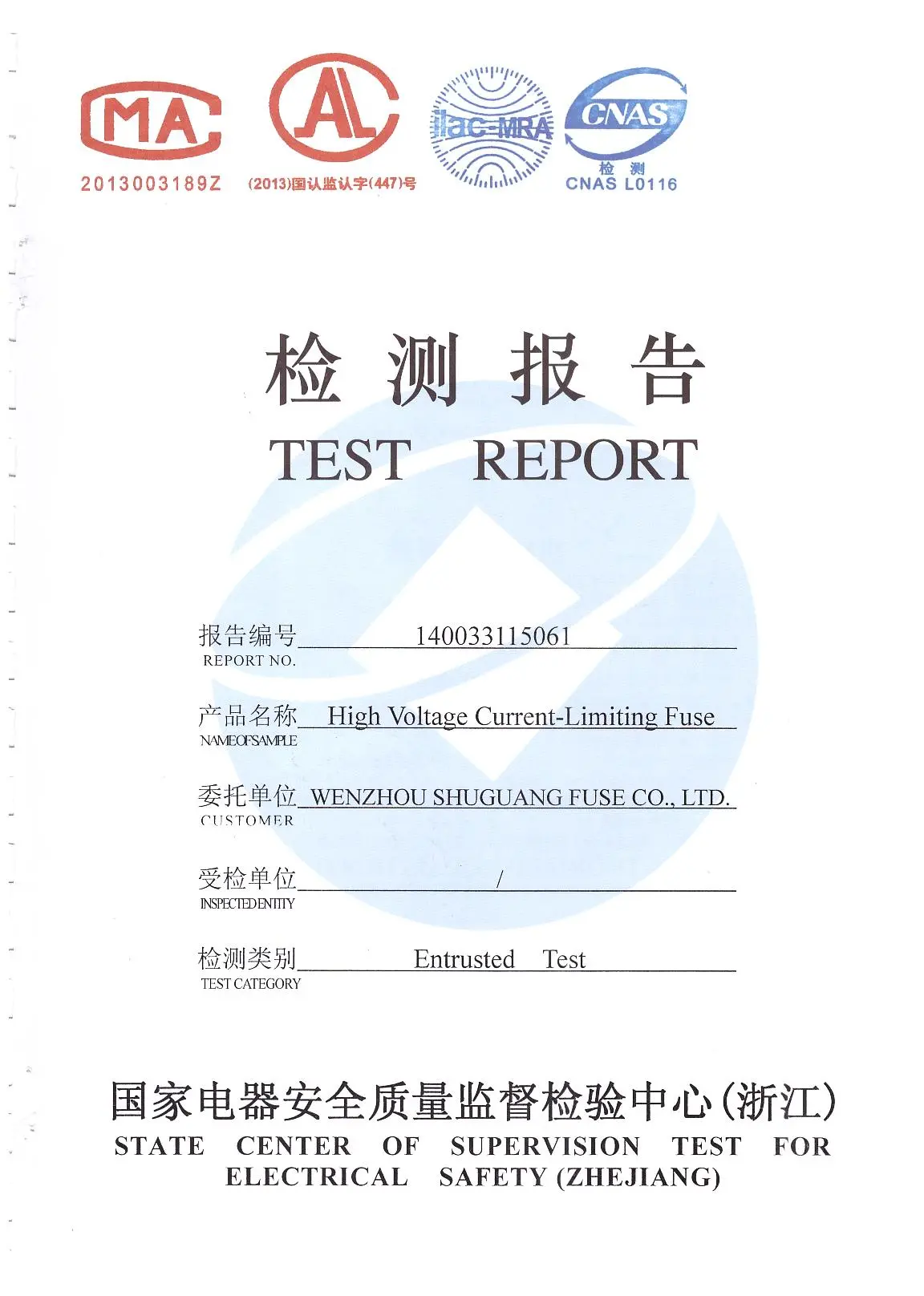
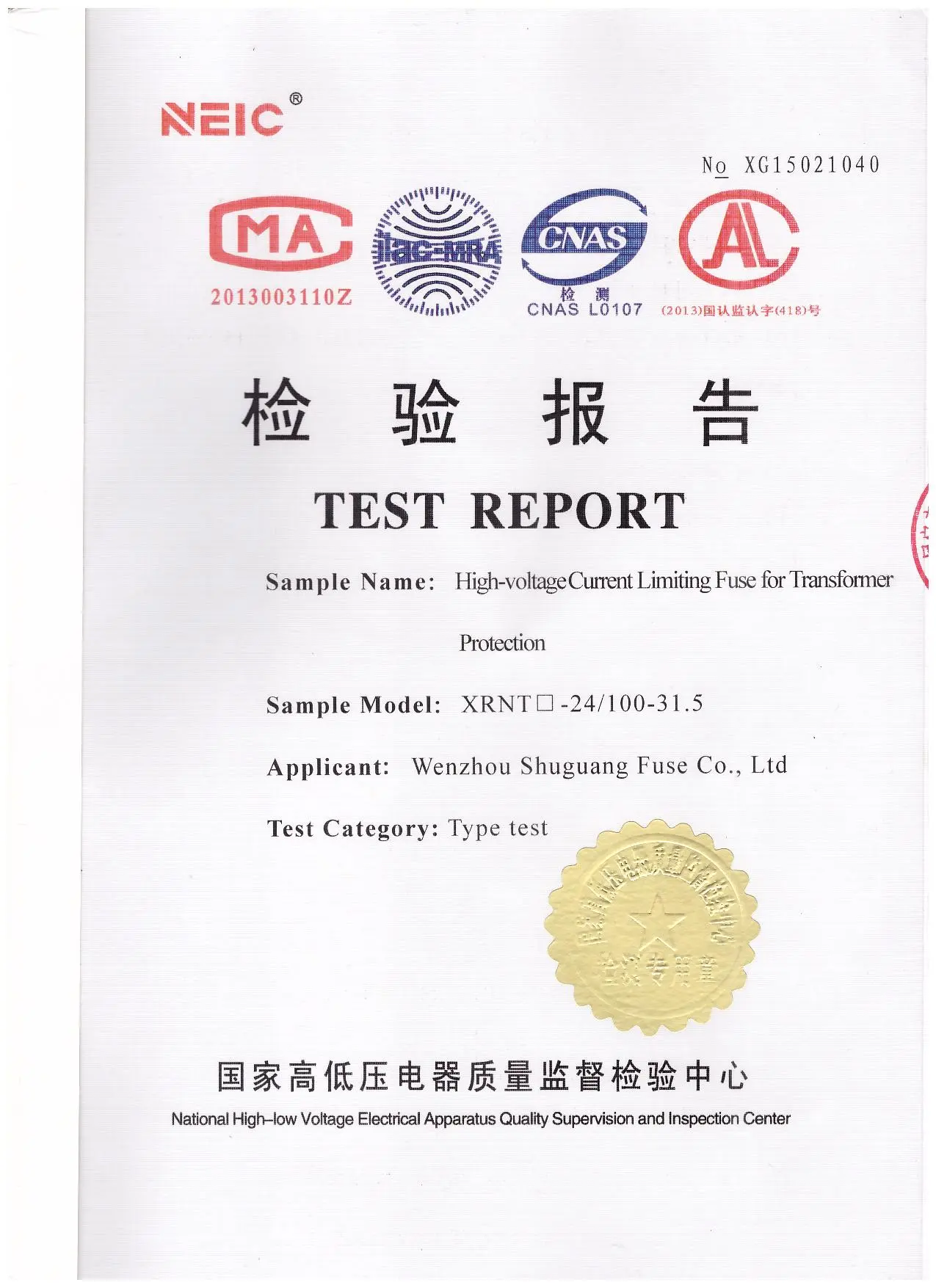
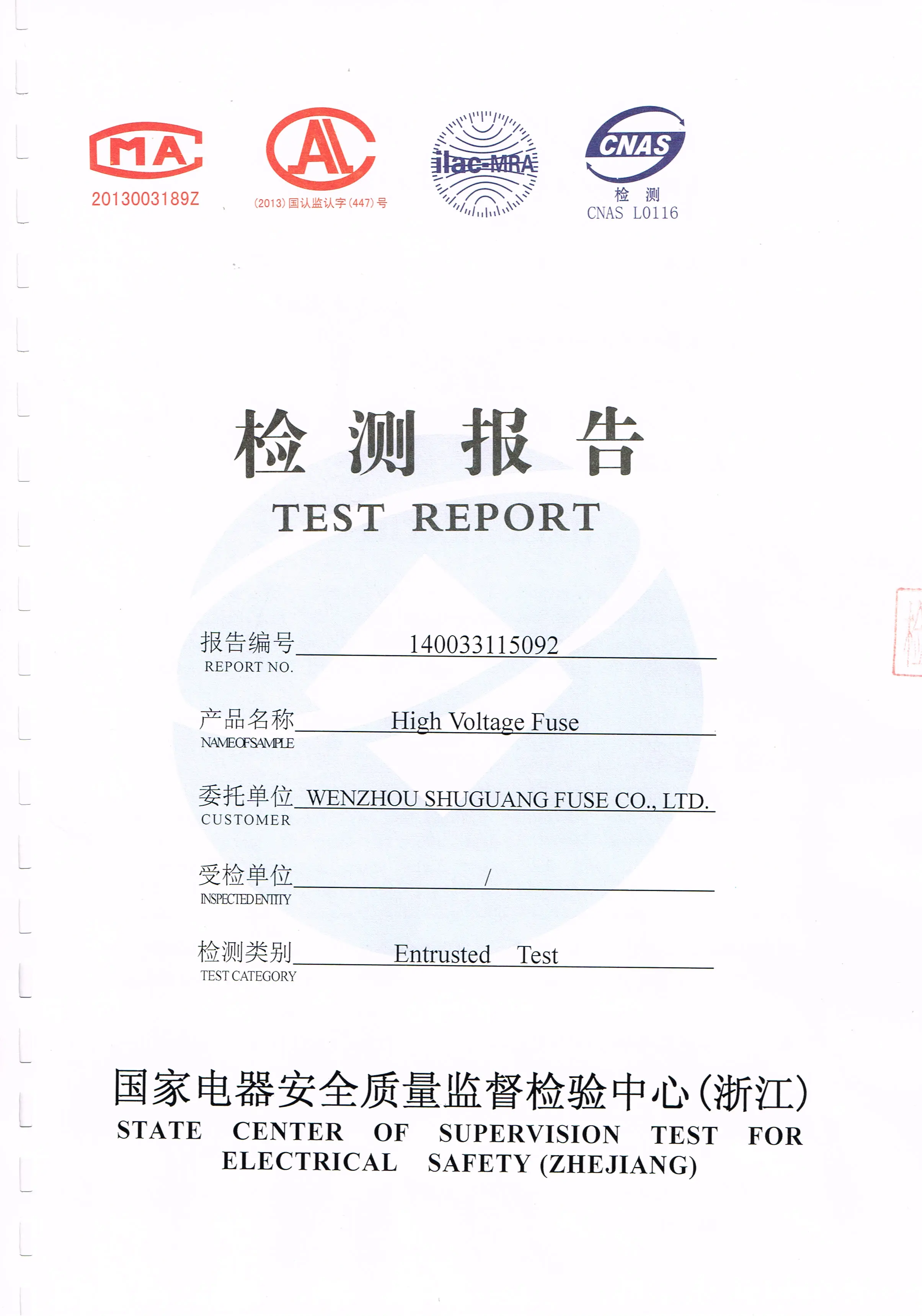
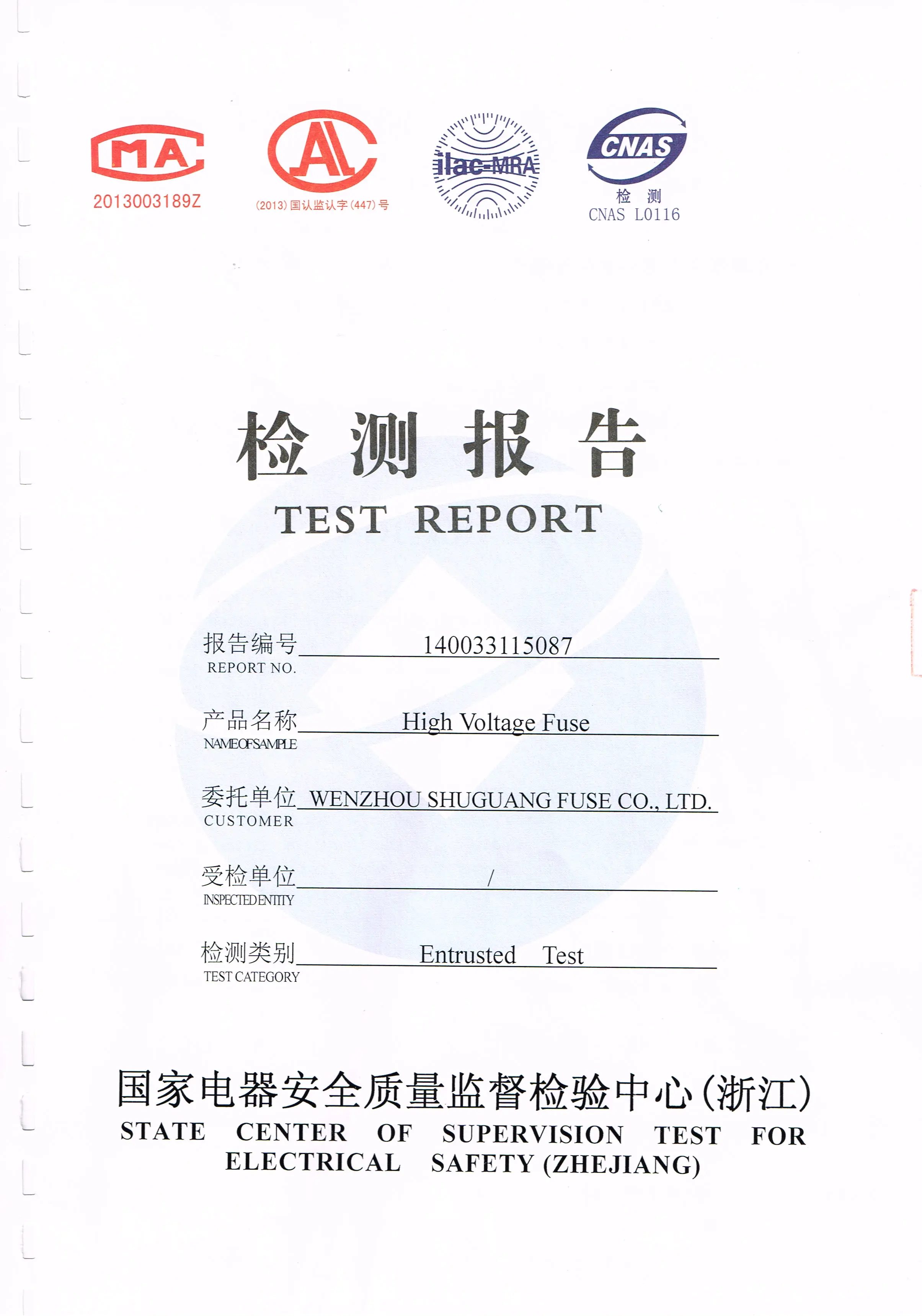
Designated by the Chinese Ministry of Electric Power Industry, Wenzhou Shuguang Fuse Co., Ltd. develops and produces highly reliable high-voltage fuses. Our products have undergone rigorous validation processes at leading test institutes:
All technical performances align perfectly with: ANSIC37.42, DIN43625, BS2692, IEC282-2-1995, IEC60644, IEC60470, IEC60282-1, IEC269-2 and Chinese national standards GB15166.1, GB15166.2, GB15166.5, GB13593, DL/T640-1997, VDE0636. Wenzhou Shuguang is fully certified under the ISO9001:2000 quality assurance system.

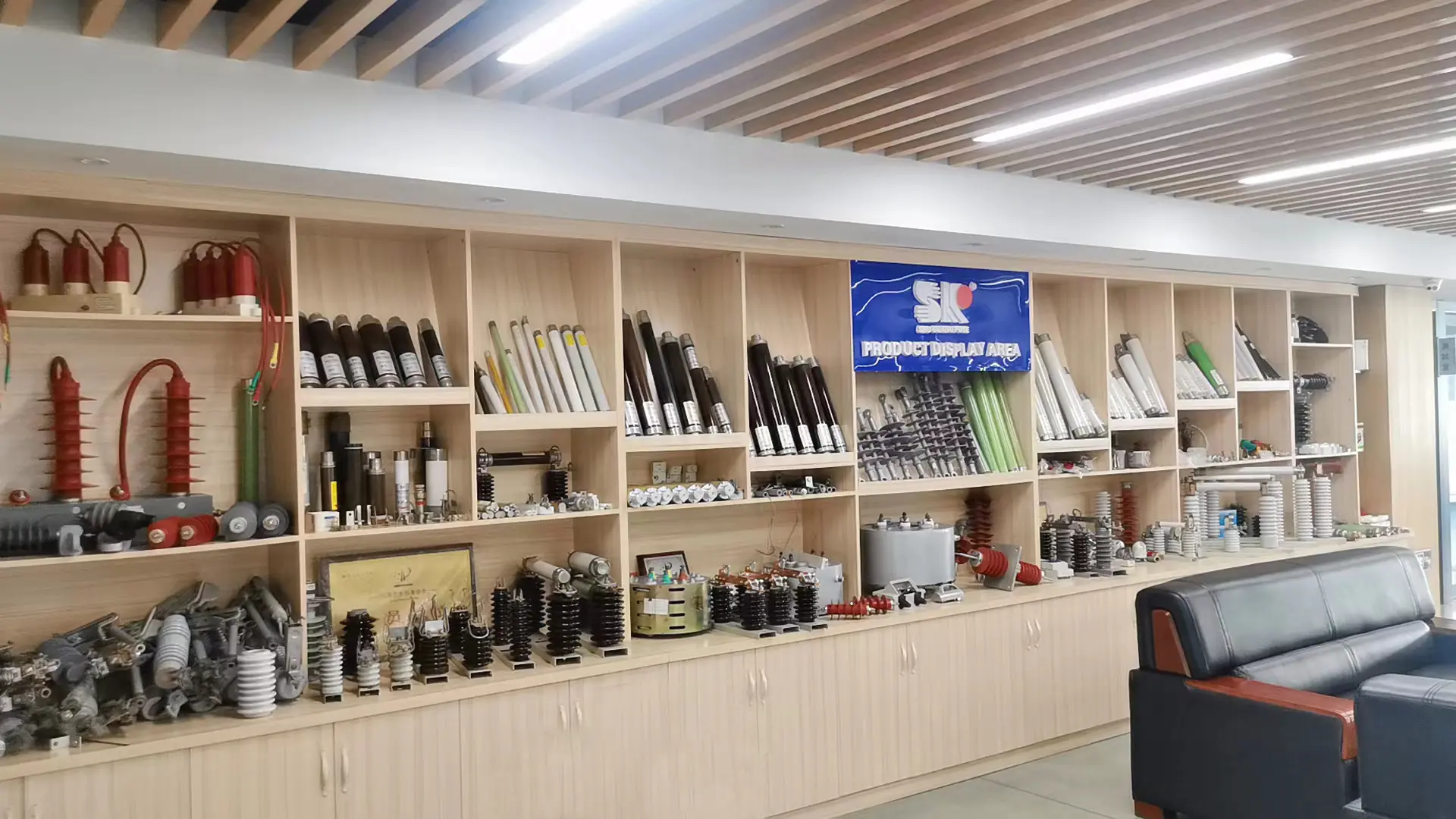
Located in Yueqing, Zhejiang Province—widely recognized as the electrical capital of China—Wenzhou Shuguang Fuse Co., Ltd. is a power technology enterprise integrating research, development, production, sales, and service. The company evolved from the "Yueqing Shuguang Fuse Factory" established in 1992.
Over three decades of manufacturing experience have enabled us to refine our metallurgical and sand-filling processes. We control every variable of the supply chain, ensuring that our proprietary brand "Shu Rong" remains synonymous with absolute safety. Our high-voltage current-limiting fuses protect millions of grid terminals domestically and globally.
Why leading global EPC projects and utilities select Wenzhou Shuguang Fuse Co., Ltd. as their core supply chain partner.
Our Yueqing production line utilizes automated winding machines for silver-ribbon helices and controlled vibration-filling equipment. This ensures consistent distribution density of quartz sand inside the ceramic tube, eliminating air voids which are the primary cause of localized corona discharge and premature fuse failure under nominal load cycles.
Being based in the world's most concentrated electrical manufacturing cluster allows us to source copper components, precision ceramic tubes, and specialized polymers locally. This geographical advantage drastically reduces logistics latency, enabling us to guarantee rapid volume production timelines even during periods of global supply chain instability.
Engineered to secure crucial assets under challenging environmental conditions.
In recent years, our company has developed rapidly, substantially enhancing both economic and environmental efficiency. We continually deepen and optimize our comprehensive quality management system. High-quality raw materials, rigorous thermal-cycle monitoring, and sophisticated testing equipment back our quality assurance protocols.
We support fully custom designs based on user specifications, tailored terminal sizes, striker forces, and non-standard electrical characteristics. The "Shu Rong" brand continues to hold an esteemed reputation among public utility networks, heavy industrial complexes, and design institutes worldwide.
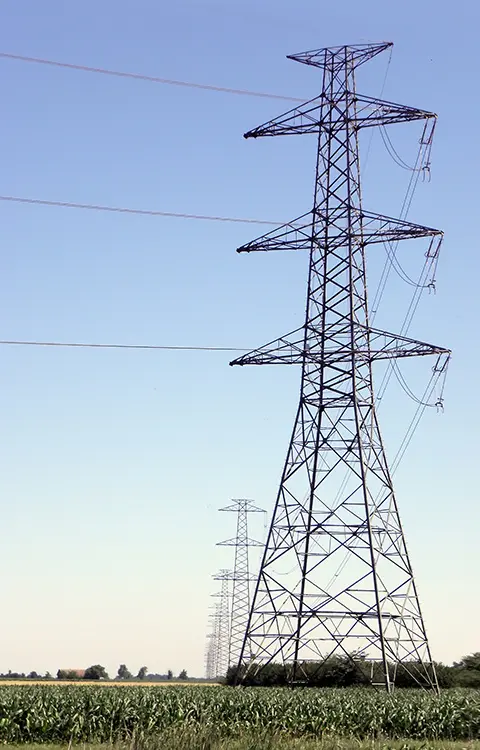

Essential parameter coordination to prevent equipment failure and ensure cost efficiency.
The nominal voltage rating ($U_n$) of the fuse must be equal to or greater than the maximum line-to-line operating voltage of the network. If applied below the rated parameter, the maximum recovery voltage during fault clearance may exceed the dielectric capacity, leading to tracking issues across the ceramic outer envelope.
Backup current-limiting fuses are designed only to break currents between their rated minimum breaking current ($I_3$) and the maximum breaking capacity ($I_1$). Low-level overload currents must be cleared by a coordinated series breaker or switch-fuse combination to avoid thermal overload of the fuse barrel.
Fuses operating inside compact gas-insulated switchgear (GIS) or custom outdoor enclosures suffer from reduced heat dissipation. Current ratings must be derated by $10\%$ to $25\%$ depending on the localized airflow to prevent nuisance trips under standard operational current cycles.
Answers to crucial engineering and logistics questions from our global partners.
A backup fuse can only interrupt currents from its designated minimum breaking current ($I_3$) to its maximum interrupting rating ($I_1$). A general-purpose fuse, on the other hand, is designed to clear all currents that cause the fuse element to melt, right down to the current that would cause melting in 1 hour. Selecting the correct type is critical to prevent thermal overload failures.
Although both meet the electrical standards of IEC 60282-1, they differ in size, terminal shapes, and mounting mechanisms. DIN standards use cylindrical caps with $45\text{mm}$ or $55\text{mm}$ diameters (typically featuring a center striker pin), while British Standards utilize bolted tag structures with offset configurations. We manufacture both variants to fit all styles of international switchgear.
Elevated temperatures accelerate the internal pre-arcing time. If the ambient temperature regularly exceeds $40^\circ\text{C}$ (e.g., inside solar PV combiner boxes in desert areas), the fuse rating must be recalculated using thermal correction factors to prevent aging or premature trips under normal operating load profiles.
Yes. High altitudes reduce air density, impacting cooling capacity and external flashover voltage. Wenzhou Shuguang designs custom fuse bodies with extended creepage distances and outer insulation structures to ensure stable, arc-free operation in high-altitude environments up to $4000\text{m}$ above sea level.
Our standard production lead time is 15-25 days from order confirmation, depending on raw material customization. Thanks to our integrated industrial setup in Yueqing and ISO9001 quality system, we maintain deep reserves of high-purity silver ribbons and high-density alumina ceramic components to support fast turnarounds.
Explore our specialized heavy-duty solutions designed for industrial power lines, capacitors, and transformers.