
Shu Guang Shu Guang

Why Choose Zinc Oxide Surge Arresters?

Time:2026-10-19 Author:Liam
0%

Choosing the right protection device begins with understanding how overvoltage behaves in real electrical systems. Lightning strikes, switching operations, and utility faults can send steep voltage waves through transformers, cables, and distribution panels. A Zinc Oxide Surge Arrester responds quickly by creating a low-resistance path for excessive energy. It then returns to a high-resistance state when normal voltage resumes.

That response comes from zinc oxide varistor blocks, which provide a strongly nonlinear voltage-current characteristic. Unlike older silicon-carbide designs, many modern arresters operate without series gaps. This structure can improve response speed and simplify protection coordination. It also reduces the risk of spark-gap failure during repeated surges. In substations, technicians often inspect arrester housings, grounding connections, and leakage-current readings after severe storms. Small details matter.

No device is perfect.

A Zinc Oxide Surge Arrester must match the system voltage, temporary overvoltage conditions, discharge current, and energy requirements. Incorrect selection may cause overheating, insulation stress, or premature failure. Standards such as IEC 60099-4 support consistent testing and performance evaluation, but field conditions still deserve careful attention. Salt fog, dust, moisture, and poor grounding can change actual service life. Manufacturer data should therefore be reviewed alongside installation records and measured system conditions. This practical approach combines established engineering knowledge with experience from maintenance teams. It also leaves room for honest reflection: a technically advanced arrester cannot compensate for neglected inspections or undersized grounding conductors. The following discussion examines why zinc oxide technology remains widely chosen, where its advantages are strongest, and which limitations engineers should consider before installation.
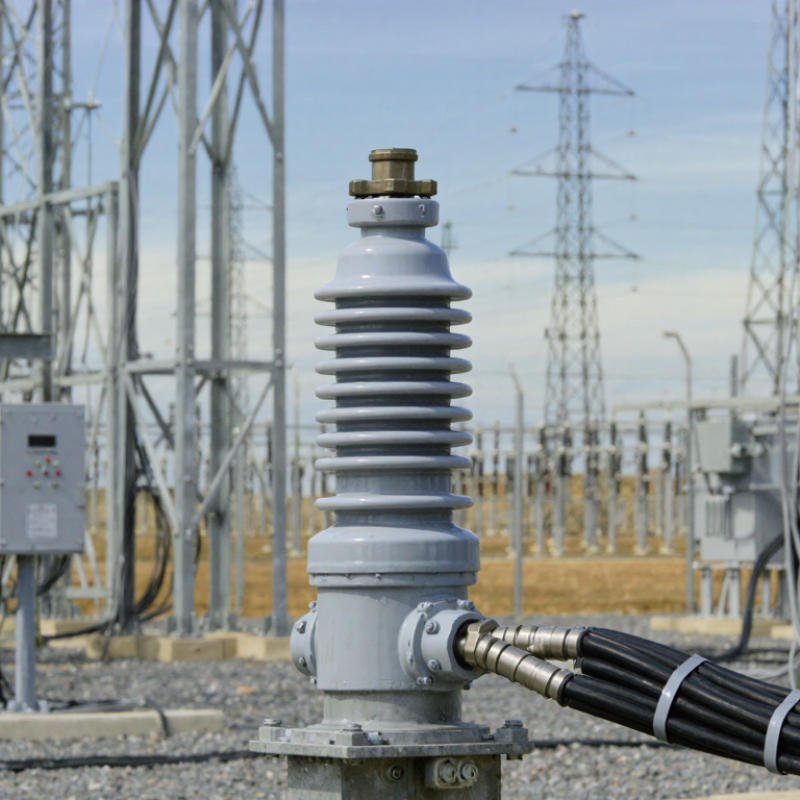
Why Choose Zinc Oxide Surge Arresters?

Zinc Oxide Varistors: The Core Technology Behind Modern Arresters

Why Choose Zinc Oxide Surge Arresters?

Zinc Oxide Varistors: The Core Technology Behind Modern Arresters

Zinc oxide varistors form the working heart of modern surge arresters. Their ceramic body contains microscopic grain boundaries with nonlinear electrical behavior. At normal voltage, only a small leakage current flows. During a lightning impulse, resistance drops sharply and diverts surge energy to ground. The response is fast.

IEC 60099-4 requires arrester evaluation through residual-voltage, thermal-stability, and impulse-current tests. These tests matter in the field, where a few kilovolts can damage transformer insulation. CIGRE Technical Brochure 549 also highlights the influence of voltage, temperature, and aging on leakage current. A varistor is not simply a switch. Its electrical condition changes gradually.

In practical inspections, technicians often monitor leakage current, surface contamination, and housing temperature. A hot, cracked arrester deserves immediate attention. I would not judge health from appearance alone. That assumption is convenient, but incomplete. IEEE C62.11 guidance connects arrester selection with continuous operating voltage, energy duty, and system grounding. The wrong rating may survive ordinary switching events yet fail during a high-energy fault. Good design therefore matches the varistor block to real network conditions, not only catalog values. Small details matter.

How ZnO Arresters Limit 8/20 μs Surges at 10 kA

Why Choose Zinc Oxide Surge Arresters?

An 8/20 μs surge reaches its peak in 8 microseconds and falls to half value in 20 microseconds. IEC 60099-4 and IEEE C62.11 use this waveform for surge arrester performance testing. At 10 kA, the impulse can deliver a severe current through a short cable section. Zinc oxide blocks respond through a strongly nonlinear voltage-current characteristic. Under normal system voltage, leakage remains very low. During the surge, resistance drops sharply, creating a controlled path to earth.

The arrester does not simply “stop” the surge. It limits the voltage across connected insulation. Its residual voltage depends on current magnitude, arrester design, temperature, and lead inductance. A longer connection can add significant voltage during a fast impulse. That detail is easy to miss.

IEC 60099-4 also evaluates energy capability, discharge behavior, and thermal stability, not only the headline 10 kA rating. IEEE C62.11 provides related test requirements for metal-oxide arresters used on power systems.

In practical testing, engineers record the applied 8/20 μs current and the voltage remaining across the arrester.

They compare that residual voltage with equipment insulation levels. A 10 kA rating alone cannot prove coordination. Field conditions may differ. Cable routing, grounding resistance, repeated impulses, and ageing can change the result.

This is where installation experience matters. The arrester may perform correctly, yet poor earthing can still leave sensitive equipment exposed.

Why IEC 60099-4 Specifies Residual Voltage and Energy Ratings

Why Choose Zinc Oxide Surge Arresters?

Why IEC 60099-4 Specifies Residual Voltage and Energy Ratings

Zinc oxide surge arresters respond quickly when lightning or switching surges enter a power system. Unlike older gapped designs, their nonlinear blocks conduct heavily during a surge and limit voltage across protected equipment. That protection depends on two IEC 60099-4 ratings: residual voltage and energy capability.

Residual voltage is the voltage measured across the arrester during a defined impulse current. IEC 60099-4 uses specified current waves, including steep-front, lightning, and switching impulses. The value must coordinate with transformer, cable, and switchgear insulation levels. A lower number is not automatically better. Excessive focus on clamping voltage can ignore system voltage, temporary overvoltage, and thermal stress. During a site review, I compare the arrester’s voltage-current data with the equipment insulation coordination study. Small gaps in assumptions matter.

Energy ratings address repeated or severe discharge duty. IEC testing evaluates whether the arrester absorbs and releases energy without thermal runaway or physical damage. Line discharge class, charge transfer, and duty-cycle tests help represent this capability. The rating is not merely a convenient joule figure on a datasheet. A long cable can reflect switching energy toward an arrester, especially in a weak network. Installation leads, grounding impedance, and surge frequency also affect real stress. I still see selections made from nominal voltage alone. That shortcut feels efficient, but it can leave the protection margin unverified.

Why Choose Zinc Oxide Surge Arresters?

IEC 60099-4 evaluates metal-oxide surge arresters using standardized impulse waves. The chart compares the characteristic front time and time to half-value of the main current impulses used for residual-voltage and energy-capability tests.

Why it matters: Zinc oxide arresters provide a highly nonlinear voltage-current characteristic, allowing normal system voltage to pass with very low leakage current while limiting lightning and switching surges. IEC 60099-4 specifies residual voltage under defined current impulses and evaluates energy capability through operating-duty and line-discharge-class tests. These values are not universal product ratings; they depend on the arrester’s rated voltage, continuous operating voltage, design, and application.

ZnO Versus Silicon Carbide: Leakage Current and Response Performance

Why Choose Zinc Oxide Surge Arresters?

ZnO Versus Silicon Carbide: Leakage Current and Response Performance

Zinc oxide surge arresters use a highly nonlinear voltage-current characteristic. During normal operation, leakage current remains very small. When a lightning or switching surge arrives, resistance drops sharply. The arrester then diverts energy within microseconds. This fast response helps limit insulation stress near transformers, cables, and switchgear. Silicon carbide arresters normally depend on series gaps, which can delay conduction slightly and create a steeper protection process.

Leakage current is an important maintenance signal. A small resistive component is expected in a ZnO arrester, but increasing current may indicate moisture, contamination, thermal aging, or internal damage. Field technicians often compare readings under similar temperature and voltage conditions. One reading alone can mislead. A cool, clean arrester may appear healthier than it really is. ZnO units also need careful thermal design because continuous voltage and heat can accelerate deterioration. No arrester is maintenance-free.

Tips: Record leakage current trends, not isolated values. Inspect surface contamination after storms. Confirm the rated continuous operating voltage before installation. Use thermal imaging when abnormal current appears. Protection studies should also consider grounding resistance and cable length. Response speed matters, but energy capability matters too. There is no perfect choice for every network.

Choosing MCOV, 10 kA Discharge Current, and Protection Level

Why Choose Zinc Oxide Surge Arresters?

Choosing MCOV, 10 kA Discharge Current, and Protection Level

Zinc oxide surge arresters respond quickly because their nonlinear resistance changes sharply during overvoltage. Selection begins with MCOV, or maximum continuous operating voltage. IEC 60099-4:2014 defines continuous-voltage and impulse-current testing requirements for metal-oxide arresters. MCOV must exceed the highest expected line-to-ground voltage, including system tolerances. For a 12 kV highest-voltage system, 12 divided by √3 is about 6.9 kV. That figure is only a starting point. Grounding conditions and temporary overvoltages may require a higher rating.

The 10 kA discharge-current value refers to an 8/20 microsecond current impulse in IEC 60099-4. It is a test reference, not a guarantee that every installation experiences 10 kA. IEEE C62.11 also evaluates residual voltage during impulse testing. This residual voltage determines the arrester’s protection level. It should remain comfortably below the protected equipment’s insulation withstand level. The coordination margin matters.

Small details often decide performance. Cable length, transformer distance, pollution, altitude, and grounding impedance can change the real stress. CIGRE Technical Brochure 544 highlights energy absorption and thermal stability as important application factors. A common mistake is choosing the lowest MCOV that matches nominal voltage. It may reduce protection during a lightning event. The opposite mistake also occurs: selecting excessive MCOV can leave equipment under-protected. I still treat catalog values cautiously, because field conditions rarely behave perfectly. Test data must be checked against the actual network.

FAQS

What does a zinc oxide varistor do inside a surge arrester?

It conducts little current normally. During overvoltage, its resistance drops sharply and diverts surge energy to ground.

Does a surge arrester completely stop an 8/20 μs surge?

No. It limits the voltage across connected insulation. The remaining voltage is called residual voltage.

What does the 8/20 μs, 10 kA rating mean?

It describes a test impulse reaching 10 kA in 8 microseconds and falling to half value in 20 microseconds.

Why is a 10 kA rating not enough for selection?

Protection also depends on residual voltage, grounding, lead length, repeated impulses, and available energy.

What is MCOV, and why does it matter?

MCOV is maximum continuous operating voltage. It must exceed the highest expected line-to-ground voltage.

How could MCOV selection go wrong?

Too little MCOV may cause stress during temporary overvoltage. Too much may reduce protection. The balance is not always obvious.

How does cable length affect arrester protection?

Long connections add inductive voltage during fast impulses. A correct arrester can still provide weaker protection with poor routing.

What should technicians inspect in the field?

They should check leakage current, surface contamination, housing temperature, cracks, and grounding connections.

Does appearance prove that an arrester is healthy?

No. A clean housing can hide electrical aging. I would not trust appearance alone.

How should residual voltage be evaluated?

Engineers record impulse current and remaining voltage, then compare it with the equipment’s insulation withstand level. Margin matters.

Conclusion

A Zinc Oxide Surge Arrester uses nonlinear zinc oxide varistors as its core protective element. Under normal system voltage, the varistors conduct only a very small leakage current. When a transient surge occurs, their resistance drops rapidly, diverting surge energy to ground and limiting the voltage across connected equipment. This fast response allows the arrester to control severe 8/20 μs surges, including impulses with a nominal discharge current of 10 kA.

IEC 60099-4 emphasizes key performance values such as residual voltage, energy capability, and protection level, helping engineers match an arrester to the electrical system. Compared with older silicon carbide designs, ZnO technology generally provides faster response, lower residual voltage, and more effective energy handling without series gaps. Proper selection requires checking the maximum continuous operating voltage (MCOV), discharge-current rating, and required protection level to ensure reliable insulation coordination and long-term service performance.

Liam

Liam

Liam is a dedicated marketing professional with a profound expertise in the industry, where he excels at highlighting the unique advantages of our core products. With a keen understanding of market trends and consumer needs, Liam frequently updates our company’s professional blog, providing......